Why Admin Nights + Body Doubling Are a Secret Weapon (Especially If You Have ADHD)
You know that pile of stuff that lives in your head? The emails you need to send, the form you half-filled out, the appointment you still need to book, the school thing you must not forget, the invoice, the renewal, the follow-up? That’s admin. And for a lot of people—especially women with ADHD—it’s not that it’s hard… it’s that it’s heavy.

That’s Me, Admin-ing!
That’s where admin nights and body doubling come in.
Body doubling is basically doing your tasks while someone else is also doing theirs. You’re not helping each other, you’re not fixing anything, you’re just… there. Together. It sounds almost too simple, but for ADHD brains it’s incredibly effective. The presence of another person gives your brain just enough structure to get started and stay with it.
Admin nights are body doubling with a name and a time attached. Everyone shows up with their boring, invisible tasks and gets them done at the same time. No hype. No pressure. Just shared momentum.
Why This Helps ADHD Brains So Much
ADHD isn’t a motivation problem—it’s a starting and sticking problem. Admin tasks are low dopamine, high resistance, and easy to avoid until they become emergencies. Body doubling helps because:
It removes the “why can’t I just do this?” spiral
It gives you an external anchor when your brain is tired
It makes starting feel less lonely and less overwhelming
You’re not suddenly more disciplined—you’re just not doing it alone.
Introverts, Extroverts… Who Is This Actually For?
Surprisingly, admin nights often work really well for introverts. There’s no small talk required, no performing, no being “on.” You can show up quietly, do your thing, and leave.
Extroverts tend to enjoy the shared energy, but they usually benefit from a bit of structure so it doesn’t turn into a social hangout. The sweet spot is clear expectations: this is focused, friendly, and finite.
So it’s less about personality, and more about knowing the container.
Let’s Talk About the Mental Load (Because… Wow)
Here’s the part we don’t talk about enough: women carry a massive amount of invisible mental load. Remembering, tracking, planning, anticipating, following up. Even when tasks are shared, the thinking about the tasks often isn’t.
Admin lives right in that mental load. It’s the background noise you can’t turn off.
Admin nights help because they give that mental load somewhere to land. Instead of holding everything in your head all week, you get to say:
“This is when I deal with this.”
That alone is a relief.
Why This Is Especially Helpful for Busy Moms
If you’re a mom, especially with ADHD, admin often happens at the worst possible time—late at night, exhausted, already running on fumes. Admin nights change that by:
Making admin feel like real work, not a personal failure
Protecting time that doesn’t compete with kids or partners
Reducing decision fatigue (no more “when will I do this?”)
Reminding you that you’re not the only one juggling all of this
There’s something deeply validating about sitting with other women, all tackling the same kind of invisible work.
How to Make Admin Nights Actually Work in Real Life
Keep it simple and human:
60–90 minutes max
Same day/time when possible
Cameras optional, pajamas encouraged
One quick intention at the start
One “here’s what I got done” at the end
No coaching. No fixing. No productivity guilt.
Just shared presence and progress.
Admin nights don’t magically make life lighter—but they do make it less lonely. And sometimes, that’s enough to finally hit “send,” book the thing, and clear a little space in your head.
The January that didn’t go as planned… (Does It Ever?)
January Didn’t Go as Planned — And That’s Still Progress
I came into this year with clarity and momentum.
Clear financial goals.
Clear boundaries.
Clear decisions about pricing, scope, and how my business would finally match the income and respect of my last corporate role.
I had a plan — and I was ready to execute it.
Then, within the first ten days of January, life intervened. A major health scare in my household. An unexpected layoff. A sudden reminder that no matter how strong the plan, reality sometimes asks us to adapt.
And here’s the thing I want to say out loud — for myself, and maybe for you too:
A plan that needs adjusting isn’t a failed plan.
January has a reputation for being the month where everything “locks in.” New habits, new routines, new standards. But growth isn’t rigid. It’s responsive. Sometimes the most responsible move isn’t doubling down — it’s recalibrating.
Yes, I still believe in boundaries.
Yes, pricing integrity still matters.
Yes, protecting your time and energy is essential.
But I also believe that boundaries can be flexible without being abandoned. That values can stay intact even when timelines shift. That choosing compassion — for ourselves or our families — doesn’t mean we’re backtracking.
If your New Year intentions wobbled a bit this month, you’re not behind.
If you had to say “yes” where you planned to say “no,” you didn’t fail.
If you’re still figuring out what’s sustainable right now, you’re doing the work.
Progress isn’t always linear — but it’s still progress.
As for me, I’m moving forward with gratitude: for health stabilizing, for perspective gained, and for the reminder that strong businesses are built not just on discipline, but on adaptability.
If this resonates, I’d love for you to share it — January isn’t over, and neither is your momentum.
And if you’re navigating growth, structure, or change in your own work or life:
Follow my business page for ongoing insights
Sign up for my newsletter on my website
Or feel free to DM me if you’d like support
We don’t need perfect conditions to keep moving — just honest ones.

🎁 Gifts That Don’t Create Clutter
It all begins with an idea.
(and the Ones That Almost Always Do)
And the One Gift That Actually Reduces It

Modern clean giftwrap
Every year, sometime in early December, I see the same pattern unfold.
A client calls me, whispering as if she’s confessing a secret:
“I love the holidays… but the clutter? Not so much.”
She’ll tell me about the gifts piling up in closets, the unused gadgets in the kitchen, the candle sets she “might” use someday, and the well-meaning décor pieces that never quite fit her style.
And then she’ll add:
“I just wish people would give things that don’t end up becoming… more things.”
And she’s not alone.
The truth is, most of us don’t need more stuff — we need more time, more space, more experiences, more rest. So if you’re looking to give generously without giving clutter, here are the gifts that always hit the mark… and the ones that rarely do.
✨ Gifts That Don’t Create Clutter
1. Experiences over objects
Concert tickets, a cooking class, a spa afternoon — these gifts turn into stories, not storage.
2. Delicious delights
Homemade treats, specialty foods, a café gift card. They’re enjoyed, savored, and appreciated… and then they disappear (in the best possible way).
3. Creative or skill-based gifts
An art workshop. A pottery class. An online course.
These inspire growth instead of dust.
4. Self-care moments
Massages, yoga passes, meditation apps — gifts that offer something most people rarely give themselves: permission to pause.
5. Donations or sponsorships
Plant a tree. Sponsor an animal. Support a charity they care about.
Meaningful. Impactful. Zero clutter.
6. Quality time
A planned brunch date, a hike, a cozy movie night.
Because presence is often the most unforgettable present.

🚫 Gifts to Avoid (Because They Almost Always Create Clutter)
1. Random décor or knick-knacks
If you don’t know their style, it’s safer not to guess.
2. Clothes and accessories (unless specifically requested)
Fit, style, taste… it gets complicated fast.
3. Generic bath or candle gift sets
People already have plenty — and they often get regifted.
4. Books (for anyone who isn’t a solid reader)
Avid readers? Go for it.
Everyone else? Expect a future donation box.
5. Kitchen gadgets
If it only does one thing and they didn’t ask for it… it’ll probably just live in a drawer.

A Quick Story…
Last holiday season, one of my clients gifted her sister something unusual:
10 hours of home organizing.
“Just try it,” she told her. “It’s the kind of gift that keeps giving.”
Her sister called me a month later — not to schedule just the 10 hours, but to continue the work long after.
She said,
“It was the first gift that didn’t add to my home… it made my home feel better.”
That’s the magic of clutter-free gifting: it doesn’t just avoid the problem — it solves it.
🎄 This Year, Give the Gift That Doesn’t Cause Clutter…
…it tames it.
For the holidays, I’m offering a special:
💛 $100 off a package of 10 hours of home organizing for 2026
Whether you’re gifting it to someone who’s overwhelmed by their space…
or gifting it to yourself (yes — you absolutely deserve that!)…
it’s a present that creates calm, clarity, and breathing room.
No clutter.
No guessing.
Just transformation.
👉 Ready to give the most meaningful clutter-free gift of the season?
Send me a message to reserve your holiday promo.
Your future self — and your future home — will thank you. 💛

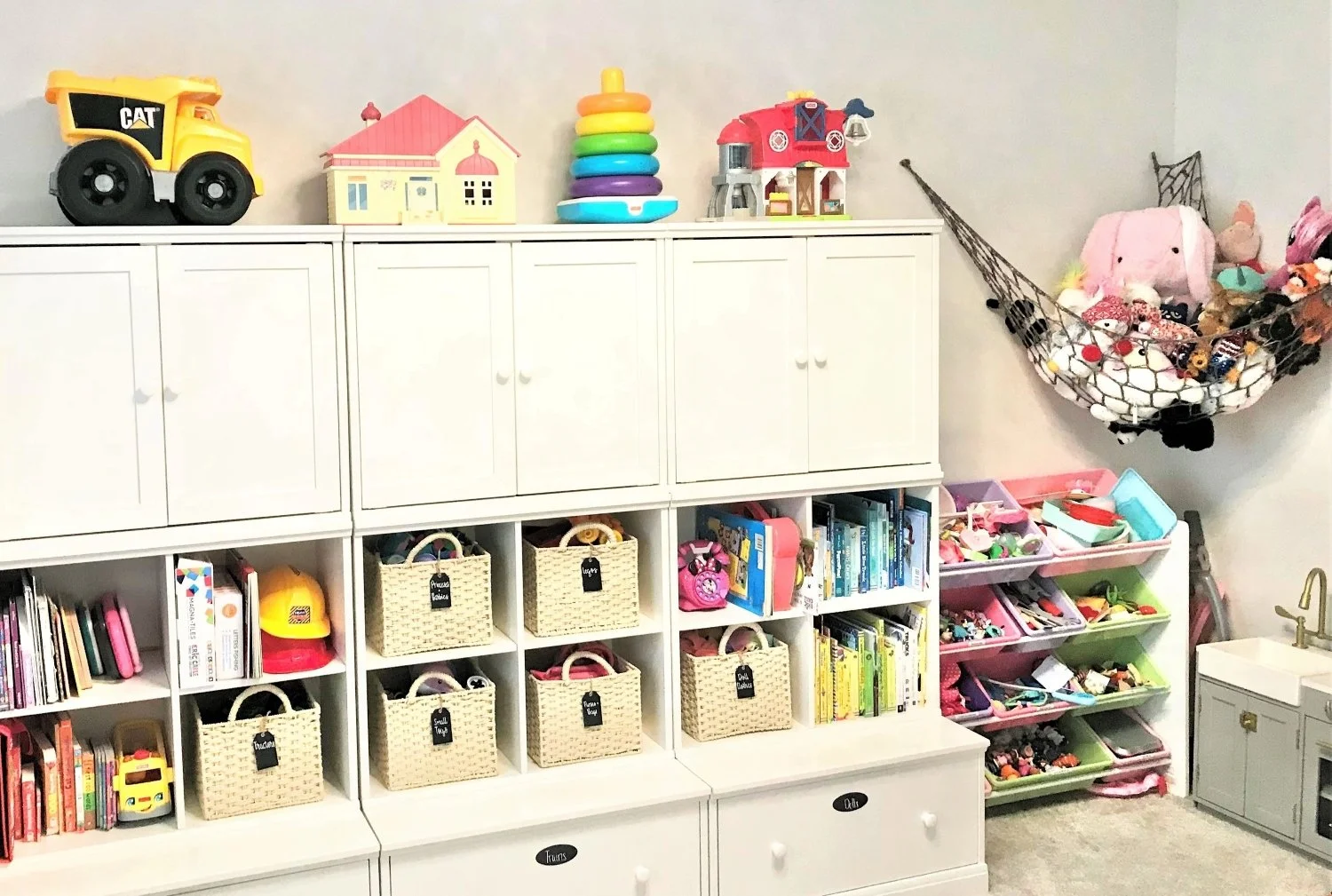
A Heartfelt Reminder: Decluttering Toys This Week Matters
It all begins with an idea.
This week is LOUD.
Black Friday. Cyber Monday. Countdowns. Carts. Deals flashing everywhere.
It’s easy to feel like more, more, more is the only direction.
But in the middle of all this noise, there’s a beautiful opportunity —
One that doesn’t cost a thing
One that teaches our kids generosity
One that makes space for joy instead of overwhelm.
✨ It’s the perfect time to declutter toys and games.
Before the new holiday gifts come in…
Before the excitement turns into chaos…
Before the playroom starts bursting at the seams again…
This week is a gentle invitation to pause and reset.
❤️ A moment to sit with your child, open the toy bins, and ask:
“What don’t we play with anymore?”
“What could make another kid really happy?”
“What toys deserve a new home?”
Kids surprise us.
They remember what it felt like to receive
They understand kindness far more naturally than we think
When we give them the chance to choose what to donate, the experience becomes powerful — even proud.
🎁 Giving Tuesday is coming
And thrift stores, shelters, and donation centers are about to be visited by families hoping to find something special.
Your child’s gently loved toys might be the treasure another child wishes for —
a doll, a puzzle, a truck, a game that feels “new enough” to bring magic into their home.
When we make space with intention,
we make room for joy —
for our kids and for someone else’s.
🧸 This week, decluttering toys isn’t just organization.
It’s generosity.
It’s teaching.
It’s heart.
And yes…
it also means less clutter for you, fewer toy avalanches, and a calmer holiday season.
Win-win-win.
Some of my Favourite Things..
It all begins with an idea.
Everyone is busy shopping this week for deals and finds!
Here’s what I’ve been picking up for my clients:
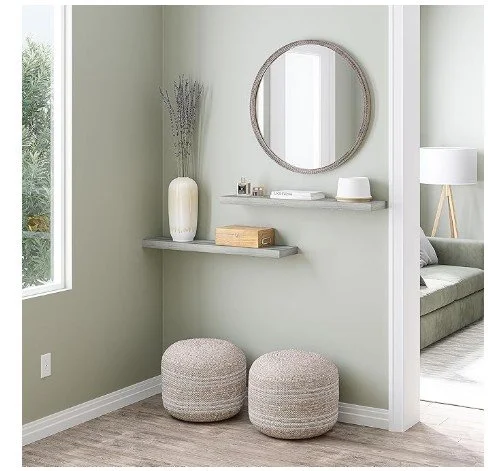
Floating Shelves
These wall mounted shelves feature hidden metal mounting brackets allowing higher weight capacity and easy installation. They can be used as a floating bookshelf, bathroom shelves, spice rack in kitchen and more
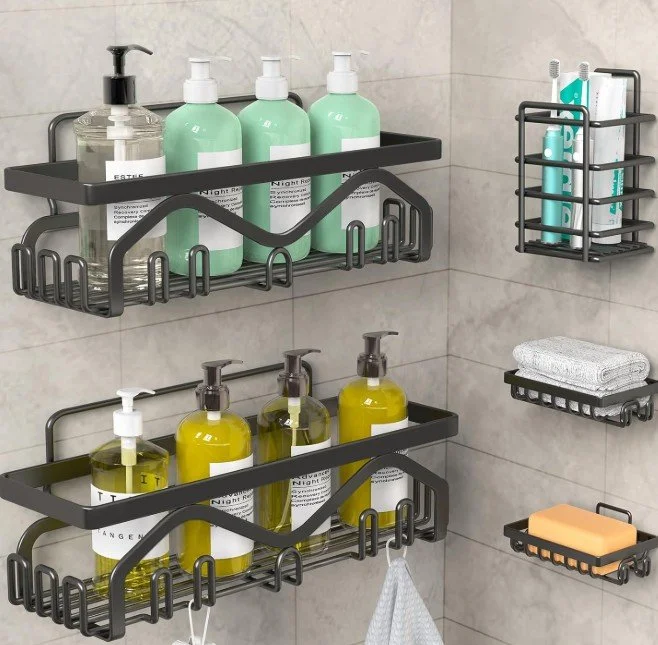
My Favourite Shower Caddy
5 Piece Shower Organizer Set: Our bathroom shower shelves set include 2 shower caddies、2 soap holders、1 toothbrush holder and 5 adhesives. The large storage capacity bathroom organizers shower can store all of your bath supplies. Also, shower rack suitable for bathroom, kitchen, tool room, etc. Taking up a lot of different roles to meet your needs.
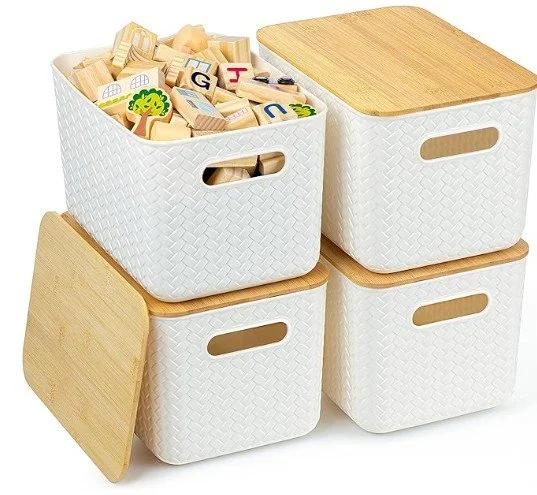
4 pack Bins with Bamboo Lids
PREMIUM MATERIALS & PERFECT SIZE: These stackable storage bins are made of quality PP5 plastic and natural premium bamboo, BPA FREE, enduring & tough. Perfect size for storage:10.2L x 7W x 6.5H inch. This plastic storage bins are 6.5 inches in depth which helps you organize and store more items for your storage needs

Maintenance Is the Real Goal (Not the New Year Reset)
It all begins with an idea.

Multiuse apartment spac
The beginning of a new year brings a familiar wave of motivation.
Fresh planners.
Big goals.
A strong urge to reset everything.
For many people, this is the moment they finally decide to get organized — and that motivation can be incredibly powerful. A fresh start does matter.
But like most New Year’s resolutions, motivation alone isn’t what determines whether change lasts.
Maintenance and consistency do.
Most Organizing Strategies Actually Work
Bins work.
Labels work.
Folding methods work.
Systems work.
The problem usually isn’t the strategy — it’s whether that strategy can be maintained once motivation fades.
As professional organizers, we often see this cycle:
A strong burst of energy
A beautifully organized space
A few busy weeks
And then… clutter slowly returns
That doesn’t mean someone failed.
It means the system didn’t fit their real life.
If a system can’t be maintained, it’s not the right system.
Organization Doesn’t Live in the Big Reset
The big January reset feels satisfying — but that’s not where organization actually lives.
Organization happens in ordinary moments:
Putting groceries away after a long day
Dealing with mail when you’re tired
Returning items to their homes when you’re rushed
These small moments determine whether a system survives February, March, and beyond.
A system that only works when you’re highly motivated won’t last long.
The Best Systems Support Consistency, Not Perfection
Many people organize for their ideal selves instead of their real ones.
Ask yourself:
How much effort does this require on a normal day?
What happens when life gets busy?
Will I still use this system when I’m tired or distracted?
Sustainable systems are simple, forgiving, and easy to reset — even on low-energy days.
Maintenance Requires Habit Change (There’s No Shortcut)
Here’s the honest part that rarely gets said:
No organizing system works unless items are put back where they belong.
Bins don’t maintain themselves.
Labels don’t build habits.
Even the best setup needs follow-through.
That doesn’t mean being perfect — it means building small, realistic habits that fit daily life.
Organization isn’t about never making a mess.
It’s about making it easy to reset.
Why a Daily 10-Minute Tidy Is More Effective Than a Big Reset
Instead of relying on occasional deep cleans or seasonal overhauls, a daily 10-minute tidy keeps systems functioning.
Ten minutes a day:
Prevents clutter from building up
Reinforces habits
Keeps spaces usable
Makes future resets faster and less overwhelming
This isn’t about cleaning everything — it’s about returning items to their homes.
Consistency beats intensity every time.
Signs a System Needs Adjusting
You may need to simplify if:
You avoid using a space because it feels stressful
The system breaks down as soon as routines change
It relies on everyone doing things perfectly
It requires constant re-sorting
When a system creates friction, it won’t last — no matter how motivated you were in January.
What Maintenance-Friendly Organization Looks Like
Systems that last tend to have:
Clear, obvious homes for items
Space to breathe (not overfilled shelves)
Minimal steps to put things away
Flexibility for imperfect days
Think open bins, broad categories, and storage where items are actually used — not where they “should” go.
A Better Way to Think About the New Year
The new year doesn’t need to be about doing everything at once.
Instead of asking:
“How can I get perfectly organized?”
Try asking:
“What can I maintain consistently?”
Because the goal isn’t a perfect January — it’s a calmer, more functional home all year long.
And that starts with systems designed for real life.